If your Wi-Fi works well in one room but slows down, drops, or buffers in others, your internet service likely isn’t the issue — your network hardware is.
This guide compares the best mesh Wi-Fi systems for large homes, including entry-level, high-end, and Wi-Fi 7 options.
Large homes, multi-story layouts, and device-heavy households push traditional routers beyond their limits. That’s where mesh Wi-Fi systems come in, using multiple nodes to deliver consistent coverage, stronger connections, and better overall performance.
This guide covers the best mesh Wi-Fi systems for large homes, broken down by real-world use cases — from affordable entry systems to high-end and Wi-Fi 7 options.
Quick Answer
For homes 2,000+ square feet, a mesh Wi-Fi system is the most reliable way to eliminate dead zones, reduce lag, and keep devices connected. The right choice depends on your home size, number of devices, and internet speed, not just the brand name.
Why Mesh Wi-Fi Works Better Than a Traditional Router
Traditional routers broadcast from a single point. Distance, walls, and floors weaken the signal quickly.
According to Wi-Fi standards published by the IEEE newer protocols like Wi-Fi 6 and Wi-Fi 7 significantly improve performance in device-dense environments
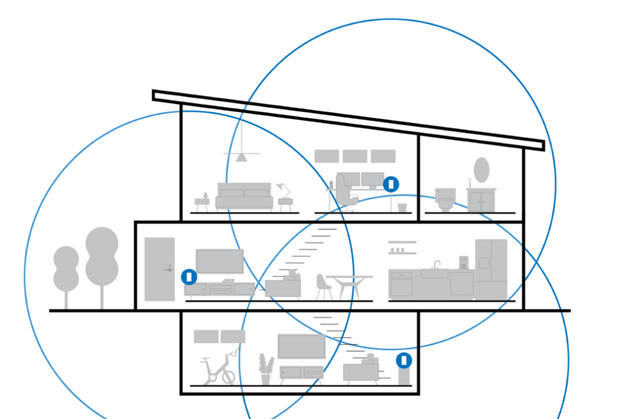
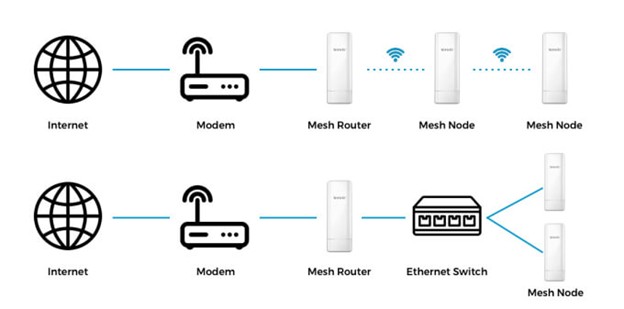
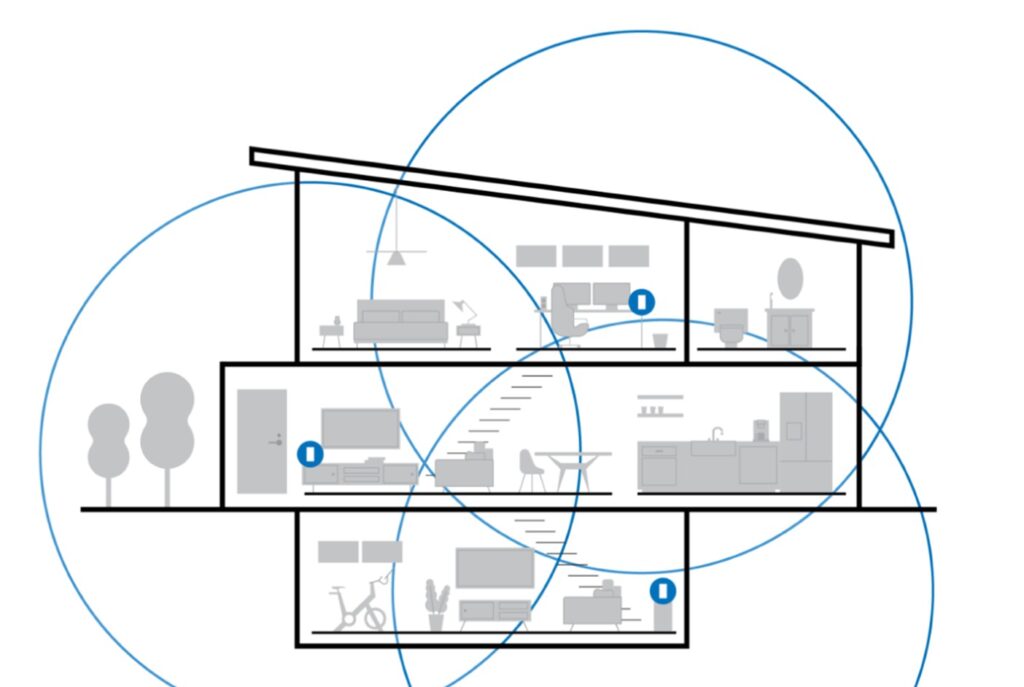
Mesh Wi-Fi systems use multiple nodes placed throughout the home that:
- Share a single network name (SSID)
- Seamlessly hand devices off as you move
- Provide full-strength coverage instead of amplifying a weak signal
The result is stable, usable Wi-Fi in every room, not just near the router.
Best Mesh Wi-Fi Systems for Large Homes
Best Entry-Level Mesh Wi-Fi System
Netgear Orbi Dual-Band Mesh System (RBE373)
Netgear
- Dual-band mesh system
- Lower price point than flagship Orbi models
- Suitable for moderate device counts and basic coverage needs
Why it’s recommended:
The RBE373 is a good starting point for users upgrading from an old router who want better coverage without paying for high-end performance they don’t need.
Check Pricing and current availability
Best Overall Mesh Wi-Fi System for Most Homes
TP-Link Deco X55 AX3000
Coverage up to 6,500 sq ft, For full specifications, see the TP-Link Deco X55 official product page .
TP-Link
- Wi-Fi 6 support
- Coverage up to ~6,500 sq ft (3-pack)
- Excellent balance of performance, stability, and cost
Why it’s recommended:
For most large homes, the Deco X55 delivers reliable speeds, strong coverage, and consistent roaming without unnecessary complexity or premium pricing.
Check pricing and current availability
Best Plug-and-Play Mesh Wi-Fi System
eero Pro 6
Amazon
- Very simple setup
- Excellent device roaming
- Minimal configuration required
Why it’s recommended:
Ideal for households that want strong Wi-Fi coverage with the least amount of setup or ongoing management.
Check pricing and current availability
Best High-Performance Mesh Wi-Fi System
Netgear Orbi Quad-Band Mesh Systems (RBE Series)
- Quad-band architecture
- Dedicated wireless backhaul
- Designed for large, device-heavy homes
Why it’s recommended:
These Orbi systems are built for demanding households with heavy streaming, gaming, smart-home devices, and multiple simultaneous users.
Check pricing and current availability
Best Ultra-High-End & Future-Proof Mesh Wi-Fi
Netgear Orbi Wi-Fi 7 Mesh Systems
Coverage up to 10,000 sq ft. For full specifications, see the Netgear Orbi 970 Series official product page .
- Wi-Fi 7 support
- Multi-gigabit speeds
- Expandable for very large or estate-level homes
Why it’s recommended:
For users with gigabit-plus internet, very large homes, or long-term future-proofing goals, Orbi Wi-Fi 7 systems represent Netgear’s flagship tier.
Check pricing and current availability
Mesh Wi-Fi Comparison Table
| System | Wi-Fi Standard | Bands | Best For |
| Orbi RBE373 | Wi-Fi 6 | Dual | Entry-level coverage |
| Deco X55 | Wi-Fi 6 | Dual | Most large homes |
| eero Pro 6 | Wi-Fi 6 | Tri | Easy setup |
| Orbi Quad-Band | Wi-Fi 6 / 6E | Quad | Heavy usage |
| Orbi Wi-Fi 7 | Wi-Fi 7 | Quad | Future-proofing |
Does Mesh Wi-Fi Fix These Problems?
✔ Wi-Fi dead zones
✔ Inconsistent room-to-room speeds
✔ Devices dropping connections
✔ Streaming buffering
✔ Video call instability
✔ Gaming latency (especially with wired backhaul)
❌ It will not fix poor ISP service
❌ It won’t upgrade outdated devices
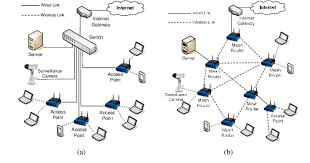
Mesh Wi-Fi vs Traditional Routers
Traditional Router
- Single broadcast point
- Weak coverage in large homes
- Performance drops through walls and floors
Mesh Wi-Fi
- Multiple nodes throughout the home
- Seamless roaming
- Consistent speeds everywhere
For medium-to-large homes, mesh Wi-Fi is the superior solution.
How to Choose the Right Mesh Wi-Fi System
Look for:
- Coverage that matches your home size
- Wi-Fi 6 or newer
- Number of nodes included
- Ethernet backhaul support
- Reliable mobile app
Avoid:
- Standalone Wi-Fi extenders
- Underpowered dual-band systems for large homes
- Systems that create separate network names
Final Verdict
A mesh Wi-Fi system is one of the most impactful upgrades you can make for a large home.
- Budget or light usage: Netgear Orbi RBE373
- Most households: TP-Link Deco X55
- Simple setup: eero Pro 6
- Heavy usage: Netgear Orbi Quad-Band
- Future-proofing: Netgear Orbi Wi-Fi 7
Choosing the right tier ensures reliable coverage today and fewer headaches tomorrow.Pro 6. Gigabit internet users should look toward Wi-Fi 6E systems like the Deco XE75.
Affiliate Disclosure
Some links on this site may be affiliate links. If you make a purchase through these links, PrimePeripheral.com may earn a commission at no additional cost to you. This helps support continued testing, research, and content creation.